
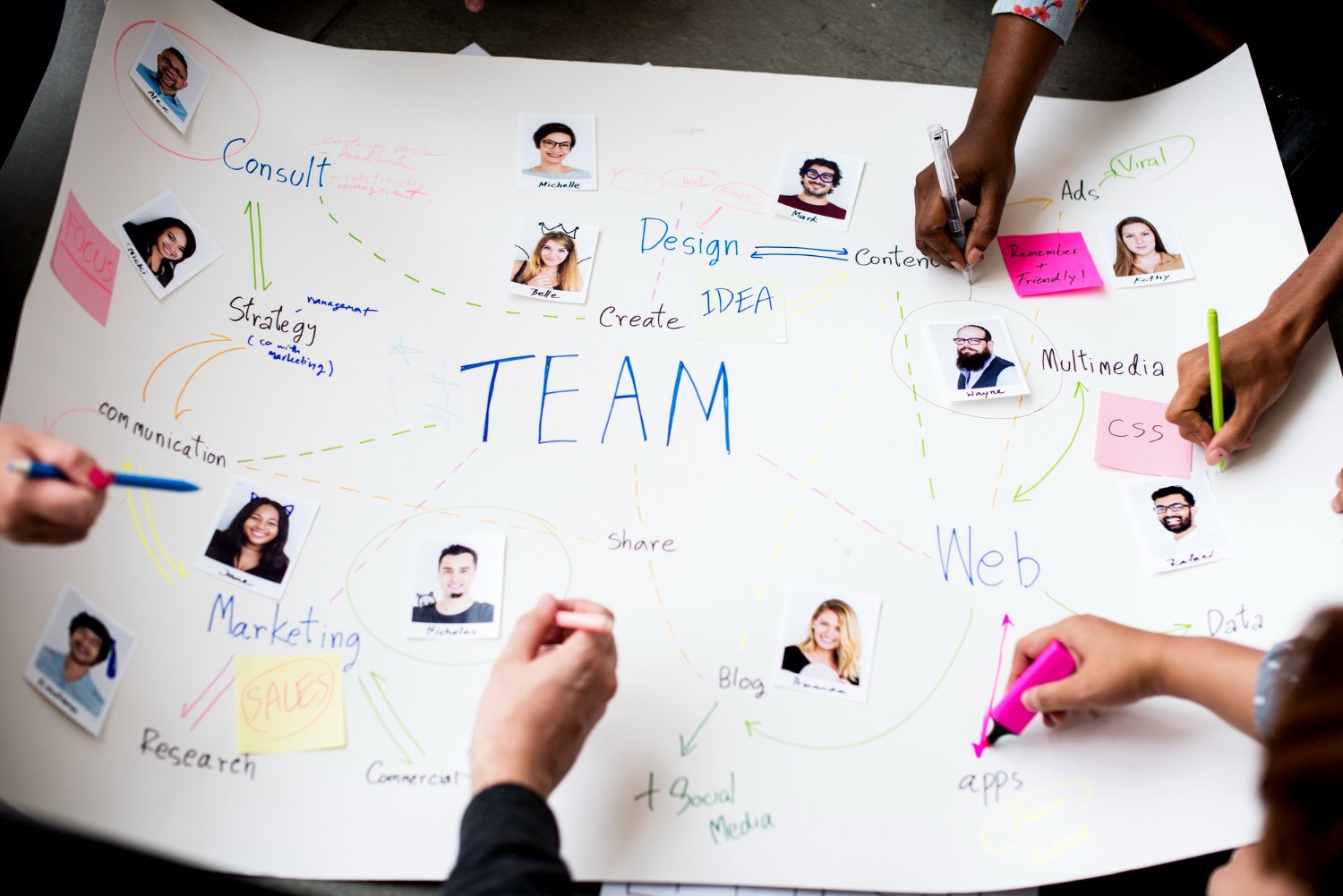
What Is Team Management and How It Works
Team management is about coordinating and directing a bunch of people to achieve a goal. A team manager or team leader brings people together, allocates tasks, and makes sure everyone is working toward the same goal. Based on studies done in workplaces, the effective management of the team relies on it’s good relationships, strategies, and communication, as well as the good leadership of one or more members of the team.
You can imagine a team as a soccer team. Each player has a different position (goalkeeper, defender, midfielder and attacker) but they all want to win the same game. Without a coach to direct them, they won’t be as good as they can be. In a company or organization, team management is the same as being the coach. It encourages collaberation and all of the members of the team to give their best.
Mainly, this includes goal setting, task assignment, conflicts resolution and communication. A team manager should monitor the progress, give suggestions and aid in the training of skills. These actions result in having a team member improving and attaining their objectives while the team reahces its goals.
As collaboration in the workplace becomes more and more important, so too does the necessity of having strong team management. Most jobs require people to work together, and people need to bring different areas of expertise. Even the best professionals struggle to produce work without the appropriate collaboration. Team management makes sure the different skills, thoughts, and work of people in the team is aligned with what the company wants.
Global Market Trend of Team Management
In the past decade, the global workplace has shifted greatly, as is evidenced by the importance and strategical complexity of team management. Once viewed as a burden on a company, management is now viewed critically as a necessity and a means to increase among other avenues of profit. The new digital economy has made the need for innovation, effectiveness, and efficiency very clear, and management is essential to all of those, as is effective team management.
Virtual and hybrid workplaces have been the most major trends in team management in the past decade, owing largely to the global pandemic and the technological infrastructures that quickly became workplace and global societal norms. A report on the global workforce of that year indicates that, for the first time, a majority of employees in the world work in a hybrid capacity.
Less than three years prior, that number was negligible, if not 0. Because of the major practical and social changes, workplace management and worker obligations have had to change. Managers have had to adopt new ways of digital communication and structured workflows, which then means employees have had to do all of those things as well, to be effective and manage their time during their new work arrangements.
Techniques, like active management, have had to become a part of the new systems that have been put in place, to replace traditional styles, like management by walking around. In many ways, management has had to be redefined for hybrid and remote work. The other side being that employees have had to also adopt the new workflows and systems that their managers have to implement for them to be effective.
In adapting to the new world of work, both managers and employees have had to change their cultures in many ways, as commuting and workplace management are lifeblood and cornerstones, arriving first, and ending last and traditional styles, like management by walking around have had to be replaced, and so have employees.
The change has been so great that the world of work now comprises a new set of cultural imperatives to replace the cultures of traditional commuting and workplace management. Among other things It is a re establishment of respect and personal responsibility around time management, not being social and instead being professional, to, as the name states, working in a work space and the elimination of personal issues as a social construct from the workplace.
It has changed many things, including the traditional means of addressing a need or a want, from a personal perspective, perhaps the most notable, simply including them in your planning and implementation of both the work and the time management aspects of the work.
It has made the traditional means of addressing a need or a want, from a personal perspective, not wanting the work to change the world of work to a means of creating a new worker and establishing, for once, a work use, a personal unecessary, and a unproductive means in the social construct of the workplace. for once, a work use, a personal unecessary, and a unproductive means in the social construct of the workplace.
Another key trend is business spending on team management technology and collaboration tools. In 2023, the worldwide team collaboration software market was worth about $18 billion, and it is predicted to exceed $40 billion by 2030, growing at a rapid annual growth rate. Team management and overall team productivity are improved as businesses increasingly invest in project management tools, communication software, and workflow automation tools.
Employee engagement data also demonstrates the significance of effective team management. Global workplace surveys show that:
| Statistic | Insight |
|---|---|
| Only 23% of employees worldwide are actively engaged at work | Strong team management can significantly improve engagement |
| Highly engaged teams show 18% higher productivity | Effective leadership boosts team performance |
| Companies with strong team collaboration see 21% higher profitability | Team management directly impacts business growth |
| 86% of employees cite poor communication as a major workplace failure | Clear communication is critical in team management |
These numbers show why good team management is important. Well management teams are more productive, make more money, and have higher employee morale.
Team management is being changed by technology. AI and other data analysis tools help managers look at team performance. They can see changes in productivity and changes in workflows, and estimate how work will look in the future. They can see in real time how the project is going, how much work is left, and how much work is left for each employee. This allows managers to make decisions in a more timely and intelligent manner.

Employee well-being and inclusive leadership creating supportive environments that allow employee to feel valuable is a new important focus for leadership. Companies that employee boosted morale and productivity see up to 41% lower absenteeism and 17% more work being done.
Team management is going from simple supervision to strategic leadership. Companies that adopt these new practices and technologies that increase employee engagement will win new competitive advantages in the economy and help the teams to build the increase the productivity. It is no longer enough to just manage a team.
Why Team Management Matters in Modern Organizations
Aim of the following text is to make it informal and to change it slightly paraphrasing it to avoid plagiarism.
In today’s world, it has become paramount for organizations to work as one unit to achieve the overall goals and objectives. Moreover, the nature of the work being done today is considerably more difficult and requires the participation of people from various skill and profession. In cases such as the one explained, managers must participate more to ensure that the integration of the diversified talents is done for the attainment of the set goals.
In general, managers must organize their teams because of the productive nature of the work being accomplished. For example, over studies done, it was realized that managerial teams that have a firm commander can produce up to 18 % more work and 23 % more profit than teams that have been disorganized and incompetent. These figures show the economic value that proper direction and team work can generate.
Additionally, good team management also enables the creation of a conducive environment for work, whereby employees feel appreciated, listened to, and spurred to work. Thus, they will likely stay involved and perform even to a larger extent than was initially expected of them. Open participation and collaboration can ultimately lead to the creation of more alternate decisions and the resolution of the problem at hand.
Lastly, good team management is vital for conflict management. Wherever there is a group setting, there is bound to be conflict and misunderstandings. An effective manager must ensure that, as a peace making leader, she assists the group members ”while at the same time ensure that no one has their neck at the other people’s finger. Good managers will ensure that as peace keepers, they never allow any one of the group members to be the او the problem that does keep people from being productive.
In summary, effective teamwork is possible with good team management. It helps employees collaborate, stay motivated, and keep their eyes on the prize.
Core Elements of Effective Team Management
Clear Goals and Objectives
Starting a journey with no destination is like walking forward with no purpose. You will wander away instead of getting closer to a target. This principle also applies to teamwork. Clearly defined goals are critical to the effectiveness of a team because these objectives give everyone a target.
When managers Define goals, employees understand the target they are working towards, and how they contribute towards the larger objective. The goals give everyone a roadmap to success. Losing time, energy and focus is very easy without a target and a clearly defined plan to reach that outcome and will likely happen to the team.
Goals are also very helpful to mangers to analyze how much work has been completed, and how well the objectives have been performed. When larger goals are broken down into smaller, more short term targets, it gives the team the ability to complete each target individually. This also allows the team to stay motivated, because of the work that they have put in, and the milestones that have been achieved along the way.
Goals also help with the accountability of each team member. Knowing how much each team member has to do makes it a lot easier to analyze how well each person did, and where they could improve. This also allows their manager to give them additional training, and support to them so that they can stay contributing to the team.
Goals are essential to creating an effective team. Without goals, a team will have no direction, focus, or organization.
Communication and Collaboration
People say that communication is the life blood of a team, and it is true. With out communication a team can all of the best talent in the world but it still won’t matter. Team management will make sure that the information is flowing as it should between superior and subordinate, and vise versa.
Effective communication enables team members to articulate their thoughts, pose queries, and give responses to one another. These offers are the basis of confidence because they work to stimulate innovative thought and offer employees the sense of assurance that their voices are heard and that they can offer their thoughts and proposals. Teams that communicate well and constructively seem to also enjoy the benefits of increased productivity and innovative thought.
When communication is direct, collaboration is achieved. Team members are able to work together in task coordination, joint work on task resolution, and assisting one another in the event that a task is difficult. The desired outcome is often achieved as a direct result of the joint decision-making process.
The role of the manager is to communicate to the members of the group the importance of the other member’s contribution.
In team management, communication is the critical factor that instills confidence in the members of the team, strengthens the relationships, and keeps the members moving as a united team toward their goal.
Key Skills Required for Team Management
Leadership and Decision-Making
The most important part of team management is leadership. A good team manager does not just assign roles. A good team manager provides inspiration, guidance, and support. Team managers can also make decisions, solve problems, and provide motivation.
Decision-making is one of the most important facets of management. This is even more important when managers are forced to make decisions under a great deal of pressure. These include managing the distribution of team member roles and responsibilities, and making changes to the roles and responsibilities of team members.
Professional leaders provide example and come leaders can create a negative team environment, team members can create a negative team environment. Team members can create a negative team environment. A negative team environment can lead to a negative team environment.
All leadership can motivate the team and provide focus and direction to the team.
Emotional Intelligence
Being a good leader means having both good technical skills and good emotional intelligence. Being able to identify and manage both your feelings and those of others is what separates average leaders from good leaders.
At work, frustration and misunderstanding are emotional stressors. These pitfalls can derail a group’s performance and relationship. Leaders who recognize and manage the stressors, frustration, and misunderstandings perform better.
For instance, let’s say a member is having trouble doing a project. An able manager will assist him instead of criticising him, which builds trust in the manager and encourages him to speak about any other challenges.
Being able to identify and manage both your feelings and those of others can also assist a leader to manage conflict. Optimistic leaders can see the issue from both sides and resolve the conflict in a way that all parties will accept.
Being able to identify and manage both your feelings and those of others also enhances collaboration in a work team. Employees will also feel appreciated and the relationship will be warm and inviting.
Benefits of Effective Team Management
Improved Productivity
Strong team management boosts the productivity of employees. When team members are organized through management to be constructive, they complete the work they have to do quicker and more efficienly. Each team member is aware of what they need to do and what their responsibilities are.
Mangers are crucial to productivity. They do this by emparting tasks to the team based on the strength and skills of each team member. When employees are assigned tasks based on their skills and strengths, they are more likely to be construct and perform outstanding.
Team members can have a collaborative work environment, or a culture where employees can assist employees. In this culture or enviroment, collaborative work can spur innovation from their skills or provide constructive critique to assist employees.
When employees have continuity, they can provides more productivity than the compettitors. Employees can do this by continuing to build positive relationships through structing the communication, planning, and providing leadership to build he culture or enviroment where employees provide constructive work.
Employee Satisfaction and Engagement
Employee satisfaction is another major benefit of team management. When employees feel appreciated, supported, and involved in decision-making, they become more engaged in their work.
Engaged employees are more motivated to contribute to the team’s success. They take pride in their work and are willing to go the extra mile to achieve goals. This level of dedication not only improves performance but also strengthens the overall workplace culture.
Team management also fosters learning and professional growth. Managers who provide feedback, training, and opportunities for development help employees build new skills and advance in their careers.
Satisfied employees are also less likely to leave their jobs, reducing turnover and recruitment costs for organizations. In the long run, effective team management benefits both employees and companies by creating a supportive and productive environment.
Types of Team Management Styles
Autocratic Management Style
An autocratic manager runs their team by making decisions on their own, without much consideration for the ideas of others. In this style, the manager leads out all of the important strategies, processes, and decisions.
This style of management can be beneficial when the team has little experience and needs a lot of direction or when decisions need to be made quickly. Still, when overused, this style can stifle creativity and diminish employees’ motivation to engage.
Democratic Management Style
With the democratic management style, managers make decisions with the input of the team. Managers consider ideas, suggestions, and feedback from team members before making a final decision.
When employees are part of decision making, job satisfaction is higher. Because multiple head are used to solve problems, many percectives can be looked at. This will also foster a creative and innovative environment.
How to Manage a Team Successfully
Step 1 – Set Clear Expectations
Successful team management begins with clear expectations. Managers must communicate goals, responsibilities, and deadlines so that every team member understands what is required.
Step 2 – Delegate Tasks Effectively
Delegation allows managers to distribute work according to each person’s strengths and skills. This ensures that tasks are completed efficiently and employees remain productive.
Step 3 – Provide Feedback and Support
Regular feedback helps employees understand their performance and identify areas for improvement. Managers who provide constructive feedback create an environment of continuous learning and development.
Common Challenges in Team Management
Conflict Between Team Members
Conflicts can arise due to differences in opinions, personalities, or work styles. Managers must address these issues quickly to maintain a healthy team environment.
Lack of Communication
Poor communication can lead to misunderstandings and missed deadlines. Effective managers prioritize open dialogue and ensure that everyone stays informed.
Tools and Strategies for Better Team Management
Modern workplaces often use digital tools to improve team management. These tools help managers track progress, communicate with team members, and organize tasks effectively.
Some commonly used strategies include:
| Strategy | Purpose |
|---|---|
| Goal Setting | Aligns team members with company objectives |
| Performance Tracking | Measures productivity and progress |
| Regular Meetings | Ensures communication and collaboration |
| Training Programs | Develops employee skills |
These strategies help managers build stronger teams and achieve better results.
Conclusion
Management skills are essential to any workplace. It’s about taking individuals and steering them toward common goals as well as promoting a space for teamwork. Managers can refine a large group of people in to a unified team with clear goals and open communication.
Companies that practice team management see a rise in productivity and employee satisfaction, as well as an increase in creativity in the workplace. Employees who feel help and empowered will put in their best contributions in achieving goals.
With collaboration being the main driving force in any environment, management will be an important skill for any employee or leader. Good management is about fostering an environment where good teamwork can thrive.
FAQs
1. What is the main purpose of team management?
The main purpose of team management is to organize and guide a group of individuals so they can work together effectively toward shared goals.
2. What skills are required for effective team management?
Key skills include leadership, communication, emotional intelligence, problem-solving, and decision-making.
3. Why is team management important in organizations?
Team management improves productivity, employee engagement, collaboration, and overall organizational performance.
4. What are the common challenges in team management?
Common challenges include communication gaps, conflicts between team members, lack of motivation, and unclear goals.
5. How can managers improve team performance?
Managers can improve performance by setting clear goals, encouraging communication, providing feedback, and recognizing employee contributions.