
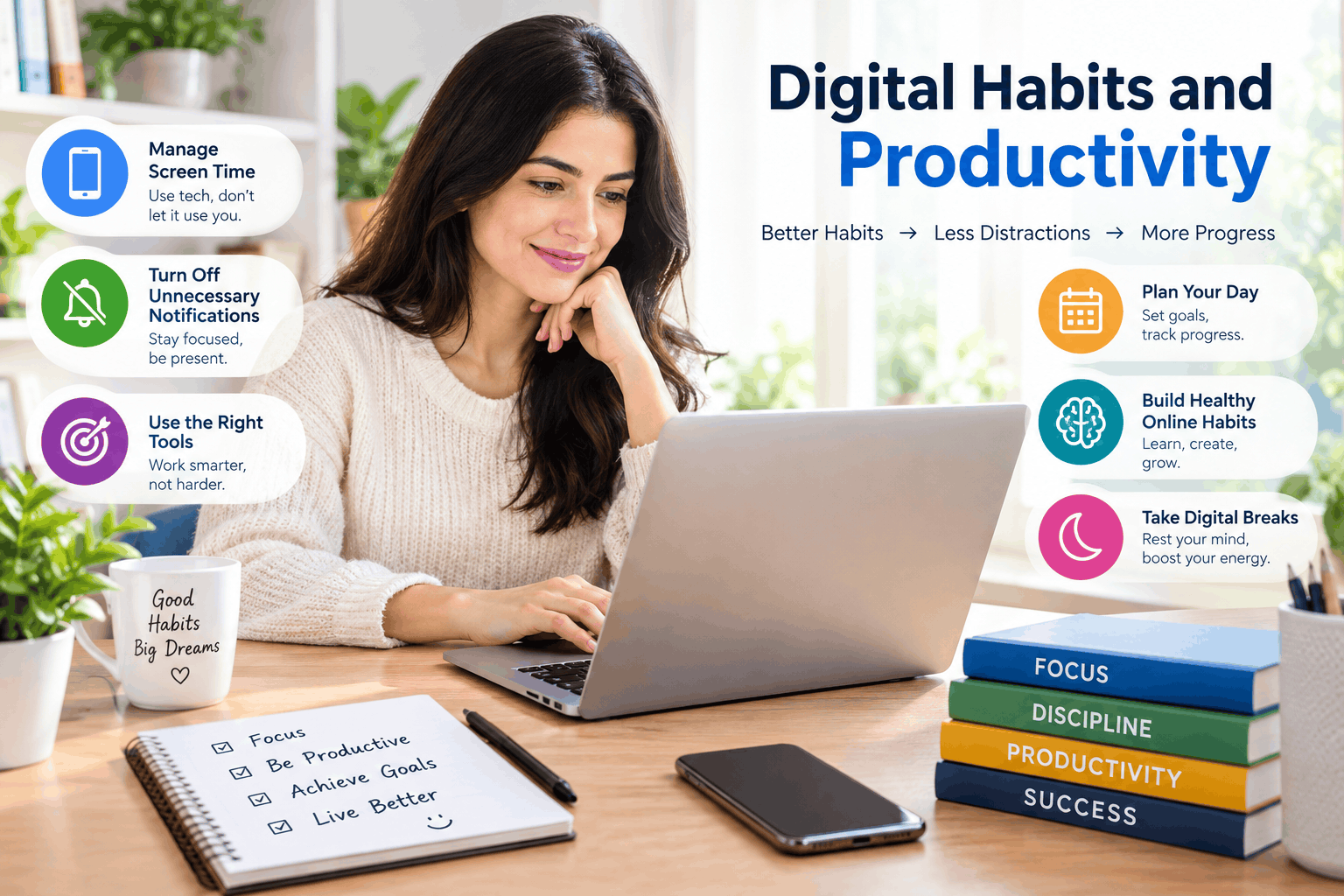
Digital Habits and Productivity: A 4-Step Plan for a More Focused Workday
You open your laptop to write one report. Forty minutes later you have answered three chat threads, skimmed a newsletter, checked the news, and the report is still blank. Nothing dramatic went wrong, yet the morning is gone. This is the quiet link between digital habits and productivity: the small, automatic ways you use devices shape how much meaningful work you finish. The good news is that habits can be seen, measured, and changed. This guide shows you how to do it step by step.
How Digital Habits and Productivity Are Connected
Your habits are the things you do without deciding to do them: reaching for the phone during a pause, switching tabs when a task feels hard, refreshing the inbox “just to check.” Individually they look harmless. Together they decide how often your attention is interrupted.
The relationship between digital habits and productivity works through attention. Focus at work is a limited resource, and every unplanned switch spends some of it. Because most of these switches are automatic, people usually blame workload, meetings, or willpower when the real cause is a pattern they have never examined.
Common Digital Habits That Drain Focus
- Notification overload. Banners, badges, and pings from chat, email, and social apps pull attention every few minutes.
- Inbox as to-do list. Leaving email open all day turns other people’s priorities into yours.
- Tab hoarding. Thirty open tabs create visual clutter and a constant sense of unfinished business.
- Reflexive multitasking. Toggling between a document and a chat window feels efficient but usually slows both.
- Scroll breaks. A “two-minute” feed check often stretches, and it does not restore energy the way a walk or stretch does.
- Always-on availability. Replying instantly teaches colleagues to expect instant replies, which erodes deep work.
- Digital clutter. Messy desktops, scattered files, and unclear folder names add small searches that add up.
The Hidden Cost of Context Switching
When you jump from a hard task to a quick message and back, part of your mind often stays with the message. Researchers describe this lingering as attention residue. The result is slower thinking and more mistakes when you return to the main task.
This is why studying digital habits and productivity together is so useful. A day with fifty small interruptions can feel busy and still produce little real output, because you rarely stay long enough to reach a flow state, the absorbed condition in which complex work moves fastest.
Step 1: Audit Your Digital Habits
You cannot improve what you have not observed, and most people badly misjudge their own screen time. A one-week audit turns vague feelings about digital habits and productivity into evidence you can act on.
What to record for five working days:
- How many times you check email and chat
- Which apps and websites take the most time
- When you get distracted (time of day, type of task)
- What you were doing just before each distraction
- How you felt: bored, stuck, tired, or anxious
Use the built-in screen time reports on your phone and computer, a browser extension, or a simple notebook. Neither approach is perfect, but together they show patterns fast. Look for triggers rather than blaming yourself. Many people discover they reach for distractions mostly when a task feels unclear, which means the real fix is better task definition, not more discipline.
Step 2: Find Your Personal Focus Pattern
Everyone has stretches of the day when thinking is sharper. Mark yours on your audit notes: the hours when you wrote, coded, or analyzed without effort, and the hours when everything felt slow.
Once you spot your peak window, protect it. Use time blocking to reserve that period for demanding work, and push email, admin, and routine messages into lower-energy hours. Your digital habits and productivity improve most when your hardest work meets your best energy, instead of fighting an inbox.
Step 3: Redesign Your Digital Environment
Willpower is unreliable, so change the environment instead. Small setup changes often beat big resolutions.
- Turn off non-essential notifications. Keep alerts only for people and systems that truly need an instant reply.
- Use focus mode. Both major phone platforms and most computers offer modes that silence selected apps for set hours.
- Batch your messages. Check email and chat at planned times, such as three or four slots a day, using task batching.
- Work in one window. Close unrelated tabs and apps before a deep session.
- Move the phone out of reach. Even a phone face-down on the desk is a pull. Another room or a drawer is better.
- Clean your digital workspace. Clear the desktop, name files consistently, and keep one reliable place for tasks.
- Set status messages. A short “heads-down until 11:00” gives colleagues a reason for a slower reply.
Treat productivity apps carefully. A blocker or timer can help, but adding five new apps often adds more clutter than it removes.
Also Read: Management Tools for Software Developers
Step 4: Build Habits That Stick
Knowing what to change is easy. Making it stay changed is harder. A few reliable methods help:
- Start tiny. Change one thing for a week, such as silencing chat during your first work block, before adding anything else.
- Stack habits. Attach a new behavior to an existing one: “After I make coffee, I close my email and open my main task.”
- Use if-then plans. “If I feel the urge to check my phone, I will take one slow breath and write down the thought.” Having a prepared response weakens the automatic reaction.
- Make the good option easy. Keep your key document open and ready, so starting is effortless.
- Expect lapses. One bad afternoon is data, not failure. Return to the plan at the next block.
Over a few weeks, healthier digital habits and productivity gains reinforce each other, because finishing important work feels better than any feed.
Team-Level Habits: Making Focus a Shared Norm
Individuals can only go so far if the workplace rewards constant availability. In remote work and hybrid teams especially, shared norms matter.
Teams can agree on:
- Response-time expectations. Clarify what needs an immediate reply and what can wait a few hours.
- Meeting-free blocks. Protect a morning or an afternoon each week for uninterrupted work.
- Async-first updates. Use written status posts instead of meetings when no discussion is needed.
- Clear channels. Define where urgent requests, general chat, and project updates belong.
- Leaders who model it. When managers send messages late at night and expect fast replies, the team follows. Managers who reply during working hours set a healthier pattern.
Strong teams treat digital habits and productivity as a shared system, not a personal flaw to fix.
A Sample Focused Workday
Adjust the times to your own peak window.
| Time | Activity |
|---|---|
| 9:00 – 9:15 | Plan the day: pick the top three tasks |
| 9:15 – 11:00 | Deep work block, notifications off |
| 11:00 – 11:20 | Check and answer messages in one batch |
| 11:20 – 12:30 | Second focus block or collaborative work |
| 12:30 – 1:15 | Real break away from screens |
| 1:15 – 2:00 | Email, admin, and quick tasks |
| 2:00 – 3:30 | Meetings or lighter work |
| 3:30 – 3:45 | Review progress, set up tomorrow’s first task |
Mistakes to Avoid
- Going to extremes. Deleting every app or banning all messages is unrealistic and rarely lasts.
- Copying someone else’s routine. The best schedule matches your work and energy, not an influencer’s.
- Ignoring the cause. If you reach for distractions when tasks feel vague, rewrite the task into a clear first step.
- Adding tools instead of removing habits. Many people who try to improve digital habits and productivity install more software and end up with more to manage.
- Skipping rest. Constant pushing without real breaks lowers quality and invites more distraction later.
How to Measure Whether Your Changes Work
Pick two or three simple indicators and check them weekly:
- Deep work hours. How long did you work without interruption?
- Check frequency. How often did you open email and chat?
- Task completion. Did you finish your top three priorities most days?
- Screen time on distracting apps. Is it trending down?
- Energy at day’s end. Do you finish feeling drained or satisfied?
Review the numbers for a month. Progress is rarely a straight line, but the trend in your digital habits and productivity should become visible within a few weeks.
Balancing Digital Wellbeing With Output
The point is not to squeeze every minute for output. Healthy digital habits and productivity should support digital wellbeing, including better sleep, calmer evenings, and real breaks. Setting a time to stop checking work messages, keeping screens out of the bedroom, and taking short breaks to walk or look away from screens all protect the energy that good work depends on. Sustainable focus beats short bursts of intensity followed by burnout.
Frequently Asked Questions
How long does it take to change my habits?
Most people see early improvement within one to two weeks of small changes, but lasting change usually takes a couple of months of steady practice.
Do digital habits and productivity really influence each other?
Yes. How often you switch tasks, check messages, and handle interruptions directly affects how long you can stay with demanding work, and therefore how much of it you finish.
Should I use a blocking app?
It can help during hard stretches, but start with free built-in focus modes. Add a blocker only if those are not enough.
What if my job requires quick replies?
Narrow the exceptions. Allow instant alerts only from a few key people or systems, and batch everything else.
Is multitasking ever fine?
For simple, low-effort tasks such as listening to music while doing routine admin, usually yes. For thinking-heavy work, single-tasking is almost always better.
Conclusion
Better focus at work does not begin with a new app or a stricter schedule. It begins with noticing what you actually do. Once you understand your digital habits and productivity patterns, you can protect your best hours, quiet the noise, and build routines that fit your real life. Start with a one-week audit, change one habit at a time, and let your digital habits and productivity improve together, one focused workday after another.