
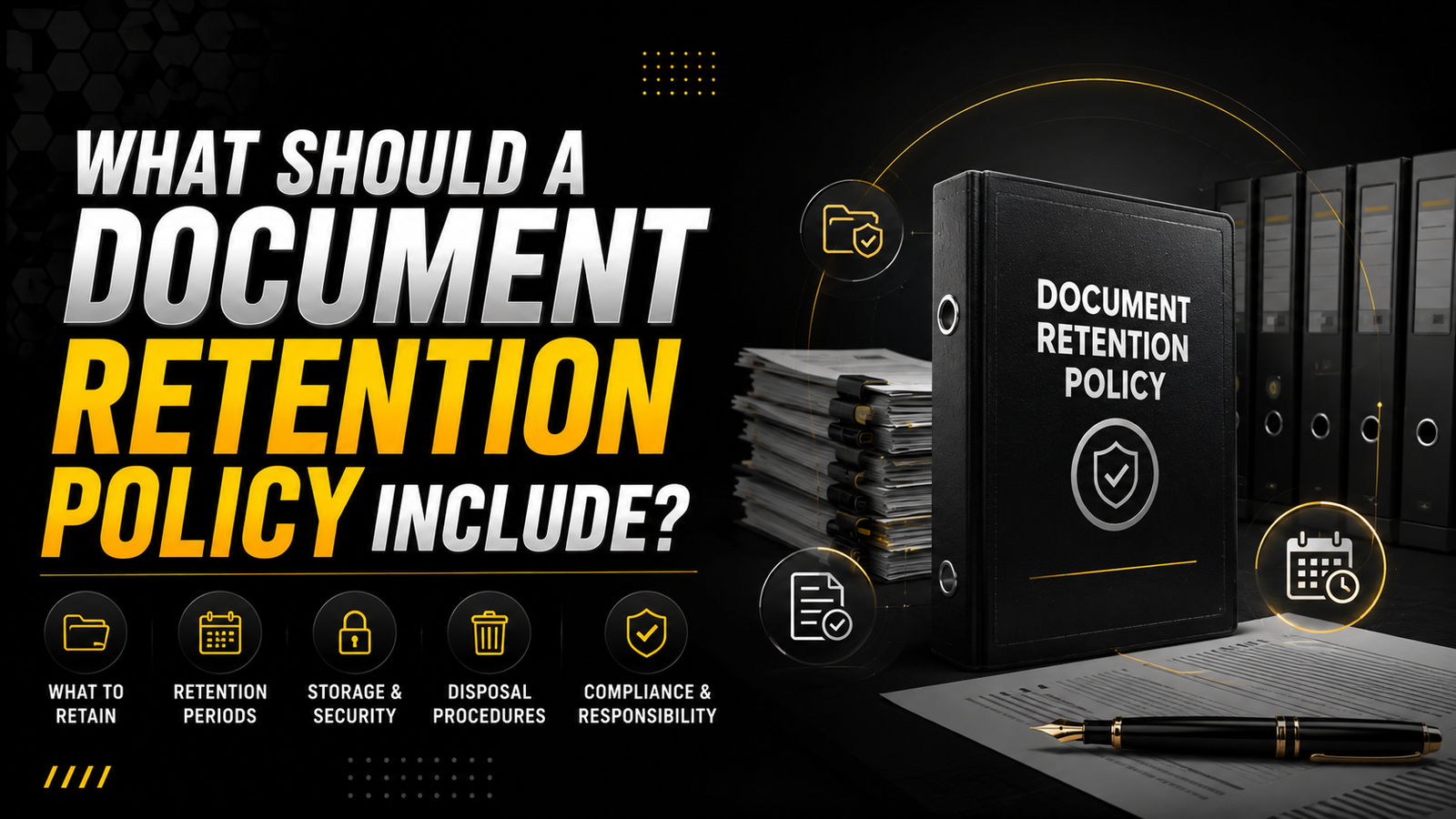
What Should a Document Retention Policy Include?
Okay so here’s a scene that plays out in way too many offices. Someone gets an audit notice, or a lawyer calls asking for a contract from four years back, and suddenly three people are frantically searching shared drives and that one filing cabinet nobody’s opened since the move. Sound familiar? If it does, you probably need a document retention policy — and if you’re reading this, you’re likely already sensing that.
I’ll be upfront: this isn’t the most thrilling topic. Compliance documents rarely are. But a policy that’s actually written down (and followed) saves you from exactly the kind of mess I just described. Let’s get into what one should actually contain, minus the jargon.
Why This Even Matters
A lot of people assume the safe move is keeping everything forever. Just in case, right? Except that’s not really true. Hoarding every record you’ve ever created costs money in storage, sure, but it also creates legal exposure you didn’t need. If you ever get sued and the case goes to discovery, old irrelevant files get dragged into the mix too — more time, more legal fees, more headaches, for documents that had nothing to do with the actual dispute.
Then there’s the opposite problem. Toss things too soon, and you might not have what you need to defend yourself, or you could run afoul of a regulator who expected you to keep something for seven years, not two. So really, the whole exercise is about landing somewhere in the middle — keep what matters, for as long as it needs to be kept, then get rid of it the right way.
If you’ve searched for something like a document retention policy template for small business, chances are you’ve already hit this wall once and don’t want to hit it again.
The Pieces That Actually Need to Be There
Start With Why
Don’t skip the purpose statement, even though it feels like filler. Say plainly why the policy exists and who it covers. Employees follow rules better when they understand the reasoning instead of just being handed a list of do’s and don’ts nobody explains.
Sort Your Documents Into Groups
Not every record carries the same weight. A signed client contract isn’t the same animal as an internal email chain about lunch orders (yes, I’ve seen companies retain those too, for reasons unclear to everyone involved). Grouping helps:
- Financial and accounting records
- HR and employee files
- Contracts and legal paperwork
- Tax documents
- General correspondence and operational records
Once things are grouped, the harder part — deciding how long to keep each type — gets a lot more manageable.
Set Retention Periods, Category by Category
This is really the backbone of the whole thing. Every category needs a number attached to it: how long, and then what. Most businesses end up building something like a record retention schedule by document type — basically a table pairing each document type with a specific timeframe.
I’ll give you rough figures below, but take them as a starting point, not a rulebook. Your industry, your country, even your state can change these numbers quite a bit.
| Document Type | Typical Retention Period |
|---|---|
| Tax records | 7 years |
| Employee personnel files | 7 years after termination |
| Contracts | Life of contract, plus 6-7 years |
| Bank statements | 7 years |
| Payroll records | 3-7 years, depending on jurisdiction |
| Emails and correspondence | 1-3 years, unless tied to legal matters |
Honestly? Talk to an accountant or a lawyer before locking these in. I’ve seen businesses copy generic numbers off the internet (a little ironic, given what you’re reading right now) and end up under-retaining something that mattered.
Know the Legal Requirements That Apply to You
This part isn’t a suggestion. Depending on what industry you’re in, you’re bound by actual laws — tax codes, labor regulations, healthcare rules like HIPAA if that’s your world, financial compliance requirements, and so on. Your policy needs to name the specific legal requirements for document retention that apply to you, not a generic checklist lifted from somewhere else.
Operating in more than one state or country makes this trickier. What’s fine in Texas might not fly in California, and international operations add a whole other layer. Map out where you actually do business first, then check the rules for each.
Decide Where and How Things Are Stored
Paper in a filing cabinet is a completely different beast than a PDF sitting in cloud storage. Your policy should say, clearly:
- Whether records are kept physically, digitally, or both
- Which tools or platforms are actually approved for storage
- How often backups happen
- Who has access — and who doesn’t
More companies are shifting entirely to digital, and honestly it makes sense — searchable, backed up, doesn’t eat office space. Before you assume a shared folder counts as “a system,” it might be worth looking into digital document retention best practices, because a folder with no access controls and no backup plan isn’t really a system at all.
Have an Actual Destruction Process
Eventually, documents need to be destroyed, and “destroyed” needs to mean something specific — not just dragged into a recycling bin somewhere. Cover things like:
- Secure shredding for anything physical
- Permanent deletion for digital files, not a soft delete that sits in a trash folder for 30 days
- A record proving the destruction happened
That last one trips people up. If you’re ever audited or dragged into litigation, being able to show a documented, consistent destruction process — one you followed every single time, not just when it was convenient — is usually what protects you. Companies that “happen” to delete something right before it becomes relevant tend to have a very bad time explaining that in court. Our document destruction policy guidelines go into more detail if you want the specifics.
Also Read : How to Choose a Learning Management System
Don’t Forget Litigation Holds
This is the one piece that gets skipped constantly, and it’s also the one that causes the most trouble when it is. If your company is involved in a lawsuit, under investigation, or reasonably expects either, normal destruction schedules get paused — for anything even remotely relevant. It’s called a litigation hold, and courts genuinely do not care about your excuses if evidence disappears during one.
Name who’s in charge of issuing a hold, how staff get notified, and how the normal retention rules kick back in once it’s lifted.
Someone Has to Own It
This sounds obvious but gets missed constantly. Who’s actually responsible — office management? IT? Legal? A compliance person? Say it out loud in the document itself. Policies without a clear owner tend to quietly rot a year in, because everyone assumes someone else is watching it.
Build in a Review Cycle
Laws shift. Companies grow, add departments, move into new markets. A policy written in 2023 might already be behind by 2026. Set a review date — once a year is fairly standard — so the thing doesn’t turn into exactly what it’s supposed to prevent: an outdated document nobody’s touched in ages.
Mistakes I See Come Up Again and Again
Treating this as a one-and-done project is probably the biggest one. Someone drafts it, it gets filed away, and eighteen months later nobody remembers it exists, let alone follows it.
Another one — mixing up data retention with document retention. They’re related, but not the same thing. Data retention tends to cover system logs, database records, analytics — the stuff behind the scenes. Document retention is more about the actual files people create and handle day to day. If your business deals with a lot of customer data, it’s worth reading into the data retention policy vs document retention policy difference before drafting either, since you may genuinely need both, written separately but aligned.
And then, of course, there’s the policy that reads beautifully but nobody actually follows because nobody was told it existed. A document sitting somewhere in an employee handbook that people skim once during onboarding isn’t a policy in any meaningful sense — it’s paperwork pretending to be one.
A Quick Story, Because I Think It Makes the Point Better Than a List Would
A friend of mine runs a small accounting firm. For years they had no real retention policy — just vibes, basically. Then a former client threatened legal action over something from four years back. Finding the relevant paperwork took almost two weeks, split across three different cloud accounts and, somewhat unbelievably, one employee’s personal laptop. Nothing bad ended up happening legally, but the stress of it, and the wasted hours, could’ve been avoided entirely with a proper system in place. After that scare, they finally built a retention schedule. Now locating a document takes minutes, not weeks. Small fix, huge difference in day-to-day sanity.
Bringing It All Together
None of this needs to be complicated. It needs to be specific to your business, written down somewhere people can actually find it, and followed consistently. At a minimum, make sure your policy covers what documents you have, how long each type sticks around, where and how they’re stored, how they get destroyed once the time’s up, who’s responsible for all of it, and how often the whole thing gets reviewed.
Get those basics right and you’ll spend a lot less time worrying about missing paperwork or legal exposure down the road — and a lot more time doing whatever it is your business is actually supposed to be doing.
If you’d rather not build this from scratch, our team can put one together for your specific industry and location. Get started with a free document retention policy consultation.
How Automation Can Reduce Repetitive Work in a Busy Law Office - Team disquantified.org
September 25, 2026[…] week, changing only a few names and dates. Multiply that across dozens of matters, and repetitive document work can quickly become a significant drain on the team’s […]