
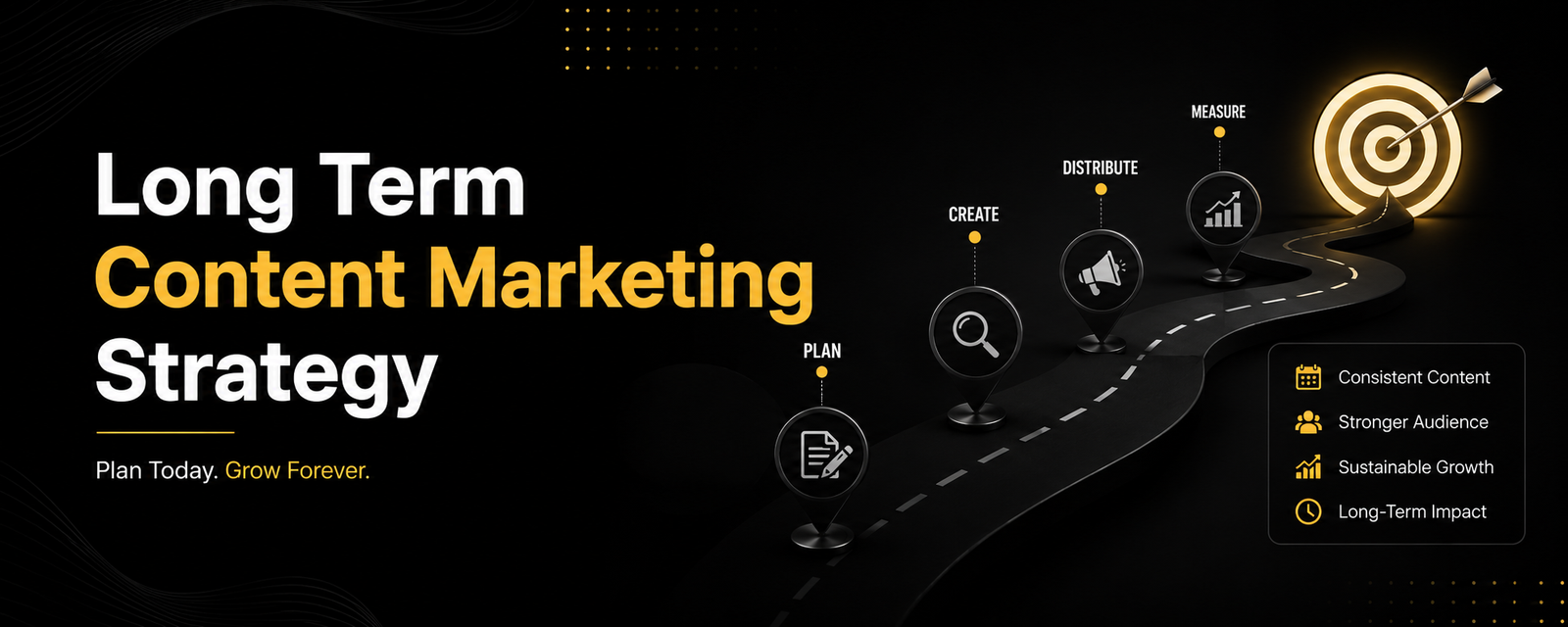
Long Term Content Marketing Strategy: A Practical Guide
A friend of mine runs a small SaaS startup. About two years back she hired a freelancer to “do content marketing” for three months. Twelve blog posts later, they got a small traffic bump, the freelancer moved on to another client, and the blog basically went silent. All that early momentum just… fizzled out.
Honestly, I’ve seen this exact story play out with at least four other companies I’ve worked with. Content marketing gets treated like a sprint when it’s really closer to compound interest — slow, unglamorous, and easy to give up on right before it starts paying off.
If you’re trying to put together a long term content marketing strategy for small business growth, the mindset shift matters way more than whatever tactic is trending on LinkedIn this week. So let’s get into what actually holds up over time.
Stop Thinking in Campaigns
Marketing teams are trained to think in campaigns — a launch, a big push, a quarter-end sprint. Content just doesn’t work like that. A post you publish today might sit at zero for six months before it gets any real traction. I’ve had pieces take over a year to start ranking, which used to drive me a little crazy.
That lag makes leadership nervous, understandably. Everyone wants numbers by next Tuesday. But pulling the plug after 90 days because the graph isn’t hockey-sticking yet is a bit like judging a marathon runner at the 200-meter mark and deciding they’re too slow.
If you’re just getting started and feel a bit lost on where to even begin, it’s worth looking at a content marketing strategy for beginners framework that leans on fundamentals instead of growth hacks. Get the basics right first. The clever stuff can wait.
Build Around Topics, Not Random Post Ideas
Here’s a mistake I see constantly, even from experienced teams: people brainstorm blog topics one at a time. “What should we write about this week?” It’s the wrong question, and it usually leads to a blog full of disconnected posts with no real strategy tying them together.
A better approach — pick four or five core topics that map directly to what your product actually solves for people. Then build clusters around each one: a pillar page, a few supporting articles, maybe a comparison piece or two, some FAQs. Search engines reward this kind of depth, and readers do too, even if they can’t articulate why. They just start seeing you as the place to go for that topic instead of some blog that popped up once in a search result and disappeared.
This is also where evergreen content ideas for blogs come in handy. Evergreen doesn’t mean boring, by the way — it means the content still holds up regardless of what’s trending. A solid “how X actually works” guide will quietly outlive a flashy “top trends for 2024” listicle almost every time.
The Repurposing Habit Nobody Talks About Enough
Something I wish someone had told me years ago: constantly writing new content is exhausting, and a lot of the time, it’s unnecessary. Some of the best-performing work I’ve ever done wasn’t new writing at all. It was taking one solid piece and stretching it across a handful of formats.
A long guide can turn into a LinkedIn carousel, a short video script, three or four newsletter sections, a thread on X, or an updated FAQ page. None of that requires original research — just repackaging what already works.
If you don’t have a proper content repurposing strategy tips system in place, you’re leaving a fair amount of value on the table. It’s not lazy. It’s efficient. People consume content differently depending on where they are, and one format almost never reaches everyone who’d care about it.
Consistency Beats Intensity, Every Time
For a while I genuinely thought publishing volume was the secret. Publish more, rank more — simple math, right? Turns out, not really. What actually moves things is showing up consistently over a long stretch, even if that means publishing less often than you’d like.
A blog that puts out one decent article every two weeks for two straight years will usually beat one that pumps out a post a day for three months and then goes dark. Search engines seem to pick up on patterns of abandonment somehow. Readers definitely do — nobody trusts a blog with a last-updated date from 14 months ago.
This is exactly where a content calendar planning tips system earns its keep. It’s not exciting work. It’s spreadsheets, deadlines, and reminders. But it’s the difference between content marketing being a business function versus a hobby someone dabbles in when they remember to.
Measuring the Right Things
Traffic is the easiest number to obsess over, and also one of the most misleading. I’ve watched posts with modest, unglamorous traffic drive way more actual revenue than viral hits that pulled in a flood of curious-but-irrelevant visitors who never converted into anything.
What actually matters, long term, is whether the right people are finding the content, whether they take some kind of next step — a signup, a demo request, a subscription — and whether the piece is still ranking and converting a year down the line, not just in the first month after publishing.
If you’re not confident in how you’re tracking this, it’s worth digging into how to measure content marketing ROI beyond just pageviews and bounce rate. Set up proper attribution early. Trying to reconstruct it from eighteen months of messy, scattered data later is genuinely painful — I’ve been the person doing that reconstruction, and I don’t recommend it.
Don’t Skip the Boring Maintenance Work
Nobody enjoys this part, but it matters more than people give it credit for: go back and refresh your old posts. Rankings decay over time. Screenshots get outdated fast. A stat from 2021 looks almost silly sitting in a post in 2026. A quarterly pass through your best and worst performing content keeps your whole library from quietly rotting while everyone’s attention is on the next new topic.
If I had to choose, I’d rather a team spend a week updating three old posts than rush out three brand-new mediocre ones. The old posts already have backlinks, existing rankings, and some domain trust behind them. Refreshing is almost always the faster win, even though it feels less creative.
Give It Time to Actually Compound
Content marketing is one of the rare channels where the effort doesn’t scale in a straight line — it builds more like a snowball rolling downhill. The first six months feel slow, and honestly a little discouraging some days. Somewhere around month nine or ten, things usually start clicking. By month eighteen, if you’ve stayed reasonably consistent, you often end up with a self-sustaining stream of organic traffic that doesn’t need constant ad spend just to keep the lights on.
That’s the real payoff of playing the long game instead of chasing quick wins. It’s less exciting in the short run, no question. But it’s also about the only version of content marketing that doesn’t fall apart the moment your budget shrinks or your team changes.
If you’re ready to stop treating content like a quarterly campaign and start treating it like an actual growth channel, get a free content strategy audit here and see where the real gaps are.
SEO Content Optimization: A Practical Playbook for 2026
September 14, 2026[…] For a deeper dive into building this kind of maintenance cadence into a broader content program, see Long Term Content Marketing Strategy: A Practical Guide. […]