
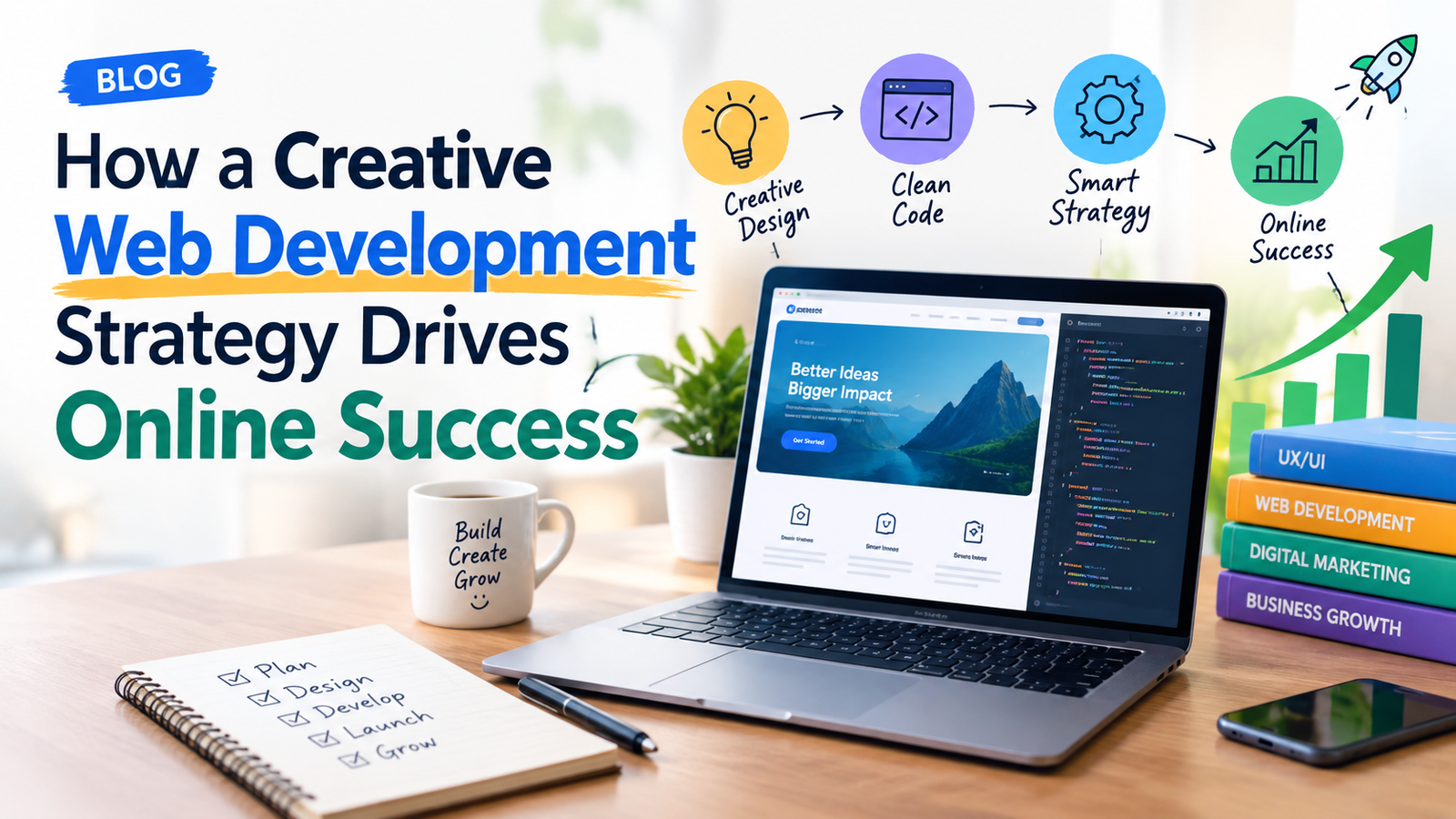
How a Creative Web Development Strategy Drives Online Success
Most businesses treat their website like a digital brochure — something to check off the to-do list and forget about. That’s a mistake. In a market as crowded as the United States, where the average person is bombarded with thousands of brand impressions a day, a website that just “exists” isn’t good enough anymore. It has to work. It has to pull its weight.
That’s where a creative web development strategy comes in. It’s not about slapping on flashy animations or chasing the latest design trend because a competitor did it. It’s about combining design thinking, technical skill, and marketing instinct into a website that actually earns attention, builds trust, and turns visitors into customers. Businesses that get this right don’t just have a nicer-looking site — they see it show up in their numbers: lower bounce rates, longer visit times, and more conversions.
Here’s a breakdown of how creative web development actually drives that kind of growth, and what it takes to build a site that works as hard as your sales team does.
1. Your Website Is Your First (and Fastest) Impression
Research from Google has found that users form an opinion about a website in roughly 50 milliseconds. That’s faster than a blink. There’s no time for a visitor to “warm up” to your brand — the layout, colors, and overall feel of your homepage either build confidence instantly or send someone straight to the back button.
This is why creative web development treats design as a communication tool, not decoration. Typography, color palettes, imagery, and spacing all send signals about who you are before a single word gets read. A financial services firm and a skincare startup shouldn’t look or feel remotely alike, even if they’re built on the same tech stack. When a site’s visual identity actually matches the brand’s personality and audience, visitors relax a little — they trust what they’re looking at, and that trust is what gets them to stick around.
2. User Experience Decides Whether People Stay or Leave
A beautiful website that’s confusing to navigate or slow to load will still lose visitors — fast. This is the part of “creative” that often gets overlooked: creativity isn’t just visual, it’s functional. A creative developer designs the path a visitor takes through a site just as carefully as the way it looks.
That means:
- Clear, intuitive navigation that doesn’t make people think
- Logical content structure that answers questions before they’re asked
- Responsive design that performs identically well on a phone, tablet, or desktop
- Thoughtful use of motion — animations and micro-interactions that guide attention instead of distracting from it
The payoff for getting UX right is measurable. Studies on load-time performance consistently show that ecommerce sites loading in about one second convert at roughly 3% on average, compared to closer to 1% for sites that take five seconds. Every additional second of delay has been linked to conversion drops in the range of 7%, and more than half of mobile users abandon a site outright if it takes longer than three seconds to load. Put simply: speed and usability aren’t technical afterthoughts, they’re revenue decisions.
3. Mobile Isn’t Optional — It’s the Majority
More than half of all web traffic today comes from mobile devices, and for many US-based businesses, that number is even higher. A creative web development strategy has to design for mobile first, not as an adjustment made after the desktop version is finished.
That shift changes real decisions: shorter navigation menus, thumb-friendly buttons, simplified forms, and images optimized so they don’t drag load times down. A site that feels effortless on a phone tends to feel effortless everywhere else, too — which is exactly the point.
4. SEO and Creativity Have to Work Together, Not Against Each Other
There’s a persistent myth that SEO and good design are in tension — that ranking well means sacrificing visual appeal. In practice, the opposite is true. Search engines reward exactly the things good creative development already prioritizes: fast load times, clean code, logical site architecture, mobile responsiveness, and clear content hierarchy.
A site built with SEO baked into the design process — proper heading structure, descriptive alt text, clean URLs, optimized images — tends to rank better and convert better, because the same qualities that help Google understand a page also help a human visitor use it. Sites that pass Google’s Core Web Vitals benchmarks (metrics covering load speed, interactivity, and visual stability) have been shown to see meaningfully higher organic traffic than those that don’t. Creativity without a technical foundation underneath it is just decoration; SEO without creative execution is just plumbing. You need both — for a closer look at how the two disciplines actually divide the work, see Content Marketing vs SEO Strategy: Which One Actually Comes First? and this practical breakdown of SEO content optimization.
5. Brand Identity Turns Visitors Into Repeat Customers
A creative website doesn’t just attract a first visit — it makes people want to come back. Strong, consistent branding across a site (visual style, tone of voice, imagery choices) builds a kind of familiarity that’s hard to manufacture any other way. When someone recognizes and trusts a brand’s website on sight, they’re more likely to return, more likely to refer others, and more likely to convert without needing to be convinced all over again.
This matters even more in competitive US markets, where a customer often has five or six nearly identical options a search away. A site that feels distinct — that has a personality — is the one people remember and come back to when they’re ready to buy.
6. Data Should Guide the Creative Process, Not Just Follow It
Creative decisions shouldn’t be made in a vacuum. Tools like Google Analytics, heatmaps, and session recordings show exactly how real visitors behave on a site: where they click, where they scroll, and — critically — where they give up and leave. This data turns creative instincts into informed decisions.
A few metrics worth watching closely:
- Bounce rate — a high bounce rate often points to unclear messaging, confusing navigation, or slow load times
- Conversion rate — the percentage of visitors who complete a desired action, like filling out a form or making a purchase
- Traffic sources — understanding where visitors come from helps focus both design and marketing effort where it counts
Creative web development isn’t a one-and-done project. The best-performing sites are treated as living products — tested, measured, and refined continuously based on what real users actually do. If your business is weighing outside help to build and maintain that system, here’s what the first three months with an SEO agency typically look like, and how a long-term content marketing strategy fits alongside your site’s technical roadmap.
Bringing It All Together
A creative web development strategy isn’t about making a site “look nice.” It’s a deliberate blend of design, technical performance, and marketing awareness aimed at one outcome: turning visitors into customers. Brand identity draws people in. User experience keeps them there. Mobile-first design meets them where they already are. SEO makes sure they find you in the first place. And data keeps the whole system improving over time.
Businesses that treat their website this way — as a strategic asset rather than a static digital brochure — consistently outperform competitors who treat web development as a one-time expense instead of an ongoing investment. In a market where a visitor’s first impression forms in a fraction of a second, that difference is what separates a site that simply exists online from one that actively drives growth.
Related reading: